

Students shouldn't have to know what they think before they begin.

ECCO changes what happens between receiving information and deciding what you think about it. Students begin with evidence and explore what it might mean before they begin writing.
What ECCO looks like in practice
The Map gives students a place to develop their thinking before they write. It can become part of the lesson itself. Teachers can see student thinking as it develops and use what appears on the Map to guide discussion and instruction.
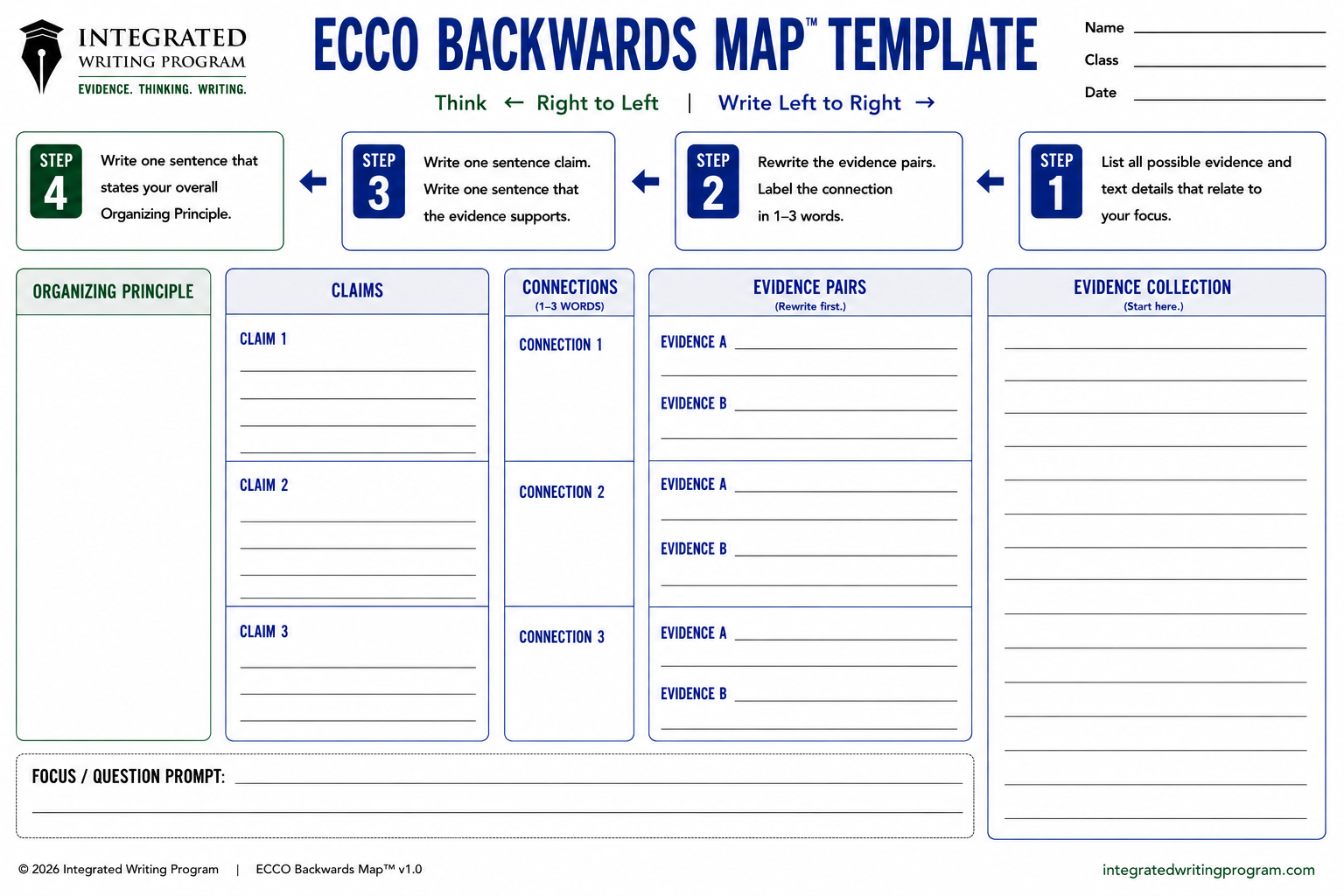
ECCO Backwards Map v1.0 showing the four stages of Evidence, Connections, Claims, and Organizing Principle.
Evidence of Growth
Schoolwide writing data demonstrate measurable growth following ECCO implementation.
Georgia Milestones results from 2024–25 showed substantial growth in higher performance bands across writing types. Internal 2025–26 assessments also showed continued movement into higher performance levels across informational, narrative, and opinion/argumentative writing.
"Dr. Jon Epstein's support as a writing coach has been transformative for Westside Atlanta Charter School..."
— Dr. Pamela Tanner, Head of School, Westside Atlanta Charter School
Westside Atlanta Charter School: Schoolwide ECCO Implementation
A closer look at how the ECCO framework was implemented across Grades 3–8, including teacher support, classroom modeling, and Georgia Milestones results.
JON EPSTEIN, Ph.D.
Director, Integrated Writing Program
Jon Epstein, Ph.D., is the creator of the ECCO Map System and Director of the Integrated Writing Program.
He has been an educator since 1992, helping students and teachers develop stronger analytical thinking and writing.

