The ECCO Method
Most students struggle with writing because they are asked to form opinions before they fully understand the material.
The ECCO framework reverses this process by guiding students to begin with evidence first, allowing stronger analytical thinking to emerge naturally through structured connections and claims.
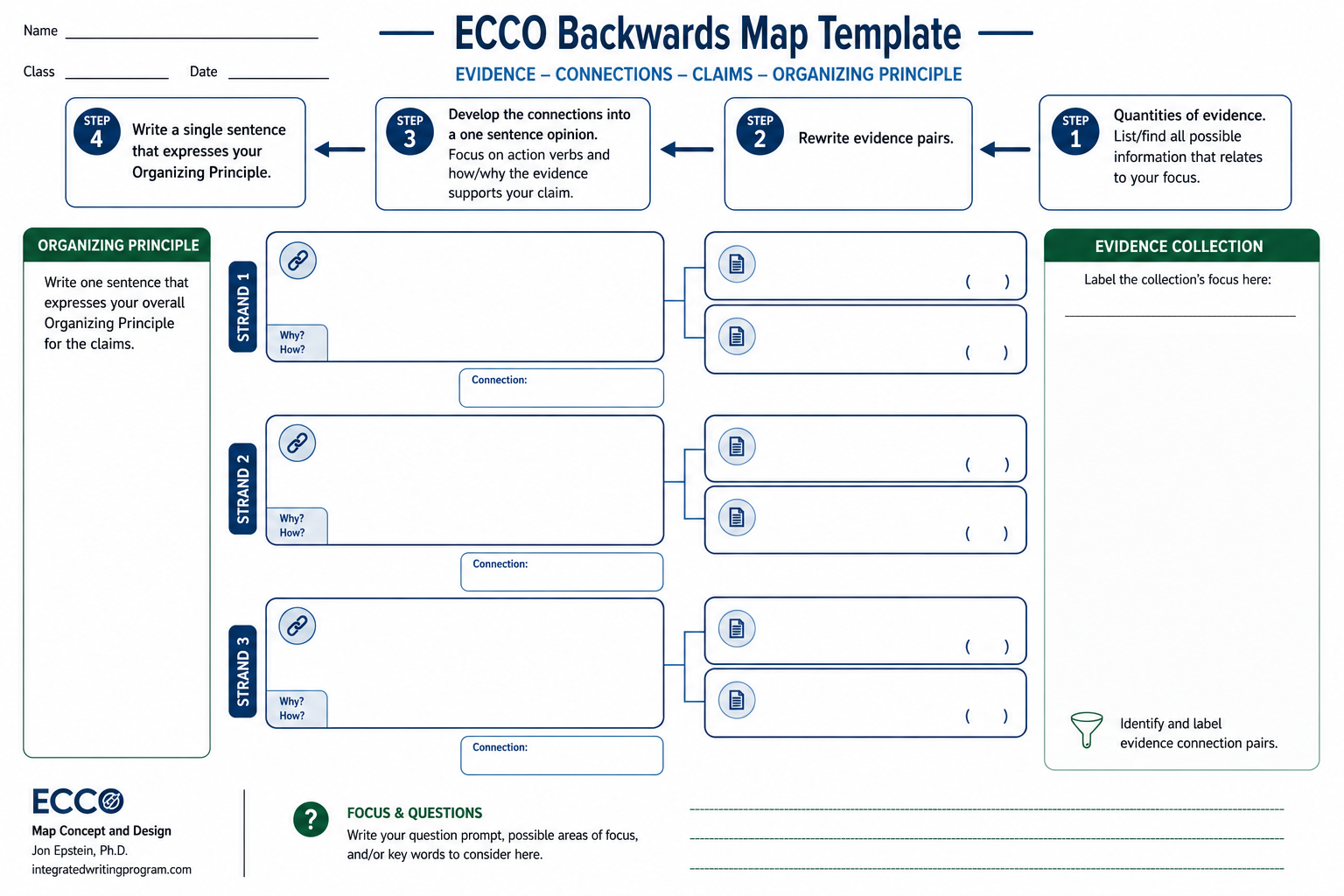
Evidence → Connections → Claims → Organizing Principles
The ECCO Analytical Mapping Process
The ECCO Map framework helps students:
organize information
identify meaningful patterns
develop analytical claims
synthesize larger ideas
improve confidence in writing and discussion
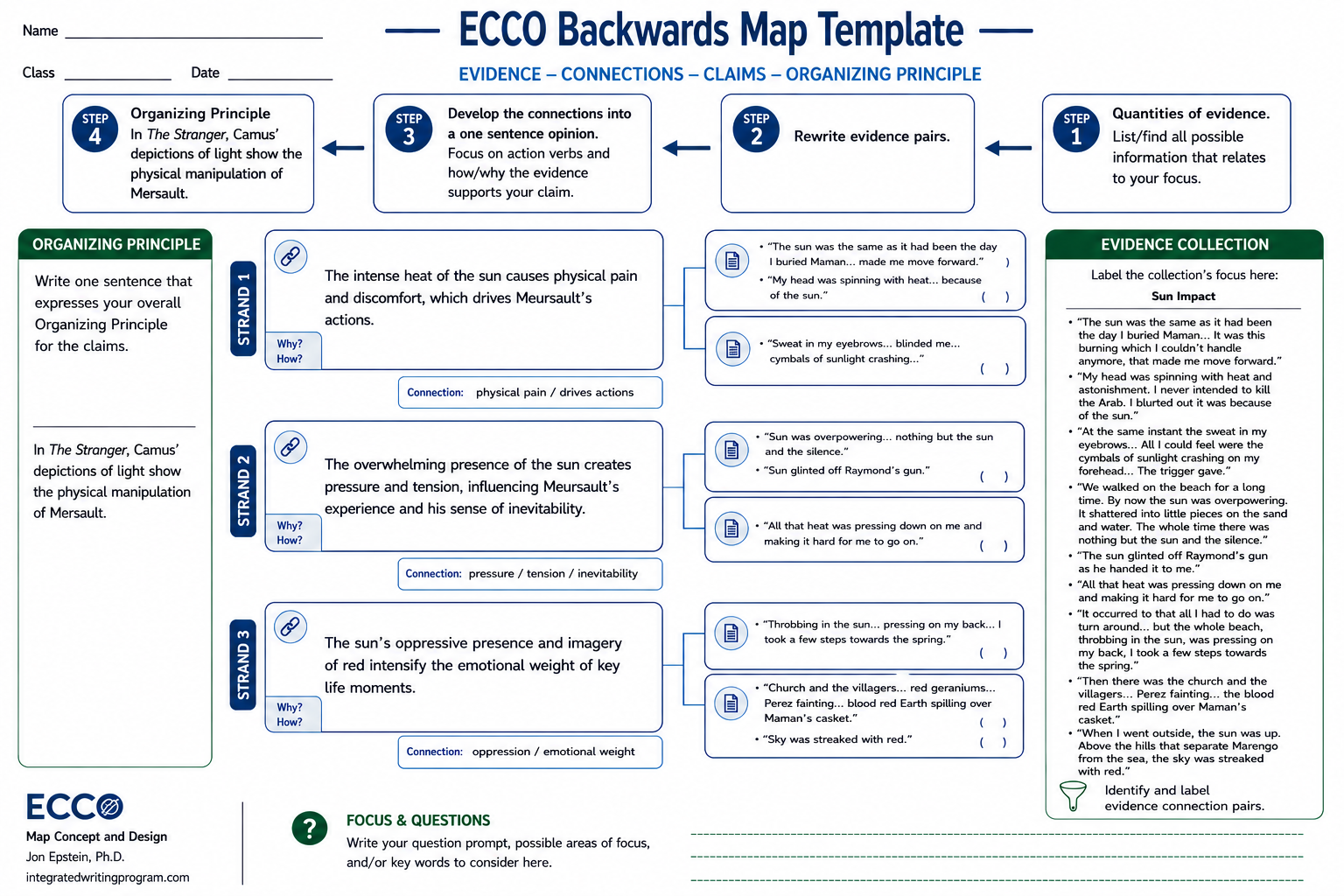
Example of Completed ECCO Map—The Stranger by Albert Camus. (10th grade student work)
Student Analytical Map Example
Authentic Analytical Process in the AI Era
As AI-generated writing becomes increasingly common in education, ECCO emphasizes the importance of visible thinking and authentic analytical development.
Students collect evidence, build conceptual connections, and organize ideas before formal writing begins, allowing teachers to evaluate how students arrive at understanding rather than simply assessing finished written products.
The ECCO process emphasizes instruction and development of ideas rather than simply evaluating finished written products.
Why ECCO Works
Traditional writing instruction often asks students to form opinions before they fully understand the material.
ECCO reverses this process. Students first gather evidence, identify patterns, and develop connections before building larger analytical claims.
This evidence-first structure helps students:
think more originally
improve close reading
retain information longer
develop confidence in writing
organize ideas more effectively
Cross-Curricular Applications
ECCO works well in literature and social studies classes because students learn to
organize evidence before they begin writing.
The same process can also support analytical work in science,
history, and interdisciplinary projects.